
Rechargeable or AAA laser pen? 18650, 16340 and AAA compared
AAA batteries or a rechargeable lithium-ion cell? What the difference means for convenience, size and daily use – and how to look after your laser pen battery.
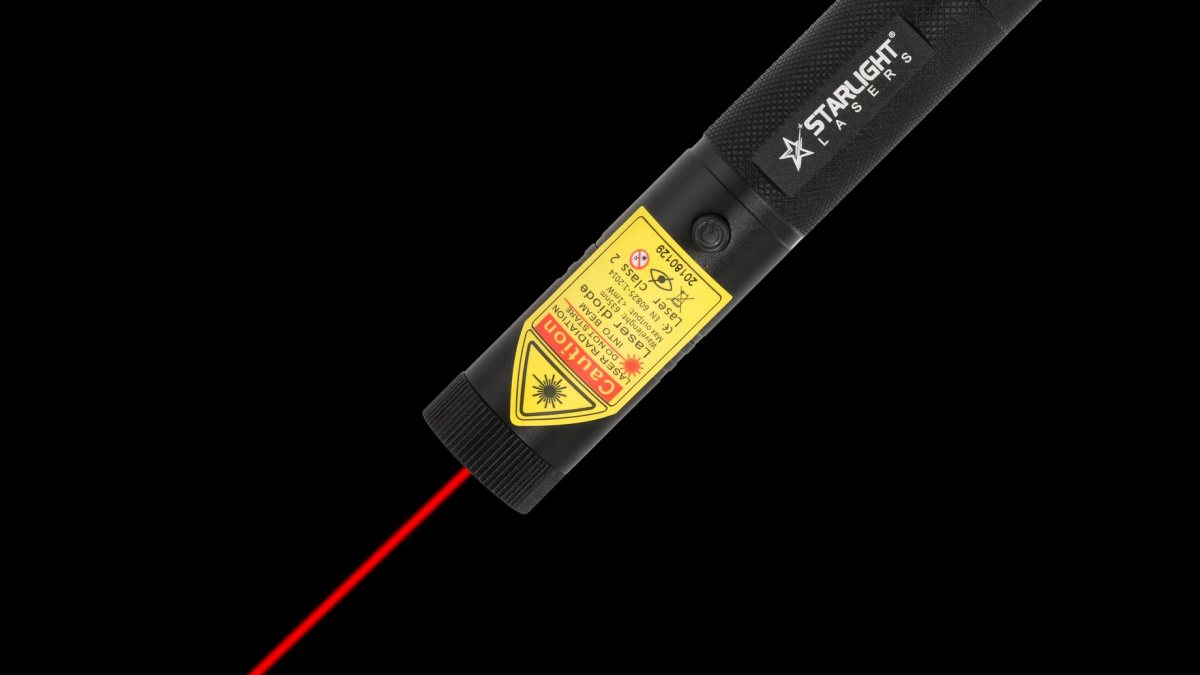
When you choose a laser pointer you are also choosing a battery system. Our laser pens run on two ordinary AAA batteries; our Pro models use a rechargeable lithium-ion cell, either an 18650 or a smaller 16340. Neither is "better" across the board. This article helps you work out which suits the way you will use your laser.
The three battery types
| AAA (2x) | 16340 Li-ion | 18650 Li-ion | |
|---|---|---|---|
| Used in | X1, X2, M1, Z1 | G2 Pro, R2 Pro, V2 Pro | G3 Pro, G1 Pro, R1 Pro, V1 Pro |
| Included | Yes, 2 powerful AAA batteries | Yes, with charger | Yes, with charger |
| Rechargeable | Only if you use rechargeable AAAs | Yes | Yes |
| Laser size | Slim pen | Compact, 11–12 cm | Full-size, 15–16 cm |
| Replacement | Any shop | PowerFox 16340 2-pack | PowerFox 18650 2-pack |
The case for AAA batteries
- Available everywhere. Supermarket, petrol station, corner shop – you will never be stuck.
- No charger to pack. Ideal for a laser that lives in a bag and comes out now and then.
- Slim lasers. AAA cells allow a true pen format with a clip.
- Long shelf life. Good alkaline batteries keep their charge for a long time in a drawer.
Downsides: if you use your laser a lot, you keep buying batteries, and that adds up – in money and in waste. You can use rechargeable AAA cells, but then you need a separate charger.
Best for: occasional presenters, cat owners, people who want a laser in the glovebox or desk drawer. The X1 and M1 are our most popular AAA models.
The case for a rechargeable laser
- Cheaper to run if you use the laser daily.
- Charger included with every Pro model: take the battery out, put it in the PowerFox charger, done. A charge lasts at least about a month with normal use.
- Sturdier build: our rechargeable lasers all have an aluminium body.
- Safety keys on the full-size 18650 models.
Downsides: you need to remember to charge, lithium-ion cells need a bit of care (see below), and the lasers are thicker than a pen.
Best for: teachers and lecturers, stargazers, farmers and allotment holders, anyone who uses a laser most days. Browse rechargeable laser pointers.
18650 or 16340?
Both are rechargeable lithium-ion cells; the numbers refer to the size. The 18650 is the larger cell and sits in our full-size Pro models, which also come with two safety keys. The 16340 is shorter, which is what keeps the compact Pro models at 11–12 cm. If you want the key lock or plan long sessions, choose an 18650 model such as the G3 Pro. If you value pocket size most, a 16340 model such as the G2 Pro is the one. Either way, a spare charged cell in your pocket means you never run out.
Looking after lithium-ion cells
- Charge before first use in the supplied PowerFox charger, one battery at a time.
- Charge on a hard, non-flammable surface and do not leave cells charging unattended for long periods.
- Mind the polarity when inserting a cell: plus to plus.
- Retire damaged cells. A dented cell or a torn wrapper means it is time for a new one.
- Carry spares in a case, never loose with keys or coins.
- Avoid heat: do not leave cells on a sunny dashboard or next to a radiator.
- Cold reduces capacity: on frosty nights, keep the laser or spare cell in an inside pocket.
- Travelling by air? Airlines usually require spare lithium cells in hand luggage; check your airline's rules before you fly.
- Recycle used cells and AAA batteries at a battery collection point.
Cost and waste over time
The price tag of a laser is only part of the story. A pen on AAA batteries is the cheaper laser to buy, but if you use it every day you will get through a lot of batteries over a year. A rechargeable Pro model costs more up front, yet its cell can be charged many times, so for heavy users it usually works out cheaper and produces far less battery waste. For light users the opposite is true: a pair of AAA batteries can last a long time if the laser only comes out for the odd presentation, and there is no cell to maintain.
Which battery suits which user?
Teachers and lecturers who point all day are usually best served by a red rechargeable model such as the R1 Pro, often keeping a spare cell in the desk. Stargazers and people who use a laser for birds do well with a green 18650 model like the G3 Pro, because it is lockable, sturdy and holds up on long, cold evenings when a spare cell can live in an inside pocket. Walkers and travellers who want to keep things small often prefer a compact 16340 model such as the G2 Pro. People who just want a laser in the house – for the cat, for the odd meeting, for fun – are happiest with a pen like the X1 or M1.
Does the battery change the brightness?
No. All our lasers are class 2 with an output up to 1 mW, whatever battery they use. The battery decides convenience and size, not power. What does affect brightness is a nearly flat battery: if your dot looks weaker than usual, charge the cell or replace the AAAs.
Our advice in one line
A few times a month: AAA. A few times a week or more: rechargeable. Need help choosing a model? Use the laser finder, read our laser pointer buying guide, or see all spares on laser pen batteries. And whatever you choose, follow the laser pointer safety rules.
More articles
Blog
Are laser pens illegal in the UK? Laser pointer law explained
Can you own, buy and use a laser pointer in the UK? What class 2 means, which uses are an offence, and how to…
How bright is a class 2 laser pointer? What up to 1 mW can really do
Wondering whether a class 2 laser is bright enough? What more power would really mean for your eyes and the la…
Red vs green laser pointer (and violet): which colour should you choose?
Green looks brighter, red is the presentation classic and violet makes things glow. The differences explained,…